
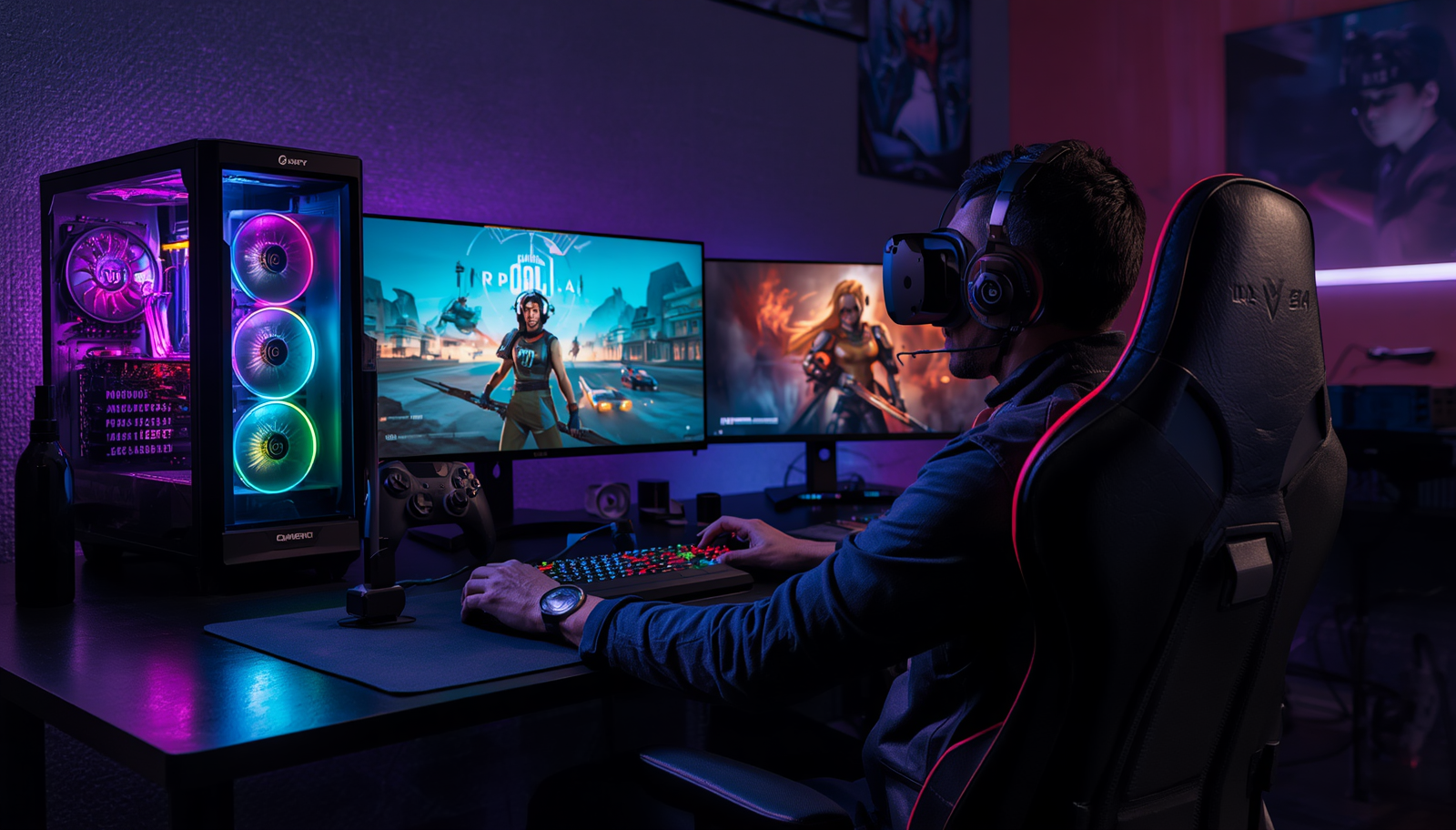
The gaming industry is evolving faster than ever before, and 2026 is proving to be one of the most transformative years in its history. Advances in artificial intelligence, cloud computing, graphics technology, virtual reality, and online connectivity are changing not only how games are developed but also how players experience them. Modern games are becoming larger, smarter, more immersive, and more accessible, creating exciting opportunities for casual gamers, competitive players, and content creators alike.
From AI-powered game worlds to cross-platform multiplayer experiences and realistic graphics, today’s gaming landscape looks very different from what it was just a few years ago. Whether you play on PC, PlayStation, Xbox, Nintendo, or mobile devices, understanding the biggest gaming trends of 2026 can help you stay ahead of the curve and make informed decisions about your next gaming experience.
This article explores the most important gaming trends shaping the industry in 2026 and explains why they matter for every player.
Artificial Intelligence Is Revolutionizing Gaming
Artificial intelligence has become one of the most influential technologies in modern game development.
Developers are using AI to create smarter non-player characters, realistic enemy behavior, dynamic storylines, personalized gameplay experiences, and intelligent game balancing. Instead of following predictable patterns, AI-controlled characters now adapt to player actions, making every encounter feel more natural and challenging.
Artificial intelligence also assists developers by generating animations, improving game testing, creating realistic environments, and speeding up production. As AI technology continues advancing, future games are expected to become even more interactive and responsive.
Cloud Gaming Continues Expanding
Cloud gaming has become increasingly popular in 2026 as internet infrastructure continues improving around the world.
Players can now enjoy high-quality games without owning expensive gaming hardware. Powerful remote servers handle all the processing while games are streamed directly to computers, televisions, tablets, and smartphones.
Lower latency, improved streaming quality, and growing game libraries have made cloud gaming a practical option for millions of players. Although dedicated gaming PCs still offer maximum performance, cloud gaming continues attracting gamers who value convenience and flexibility.
Open World Games Are Becoming More Immersive
Open world games continue to dominate the gaming industry.
Developers are building larger environments filled with realistic cities, forests, mountains, oceans, and interactive ecosystems. Advanced weather systems, dynamic day and night cycles, wildlife behavior, and intelligent non-player characters make these virtual worlds feel alive.
Rather than simply completing missions, players can shape their own adventures through exploration, crafting, side quests, and meaningful choices that influence the game world.
The focus has shifted from creating bigger maps to creating more believable and engaging environments.
Cross-Platform Gaming Is Now the Standard
One of the biggest changes in modern gaming is the widespread adoption of cross-platform play.
Players on different devices can now compete or cooperate together regardless of whether they use a PC, PlayStation, Xbox, Nintendo Switch, or mobile device.
Cross-platform progression allows players to continue their saved games across multiple platforms, creating a seamless gaming experience.
This trend has strengthened online communities while making multiplayer games more accessible than ever before.
Hyper-Realistic Graphics Continue Advancing
Graphics technology continues improving at an incredible pace.
Modern games feature advanced lighting systems, realistic reflections, detailed textures, cinematic animations, and highly accurate physics simulations.
Artificial intelligence-powered image enhancement technologies allow games to deliver stunning visuals while maintaining smooth performance.
As graphics hardware becomes more powerful, developers are creating increasingly lifelike characters and environments that blur the line between games and reality.
Esports Remains a Global Entertainment Leader
Competitive gaming continues attracting millions of players and spectators worldwide.
Professional esports tournaments now offer substantial prize pools while drawing audiences comparable to traditional sporting events.
Popular competitive games continue receiving regular updates that improve balance, fairness, and competitive integrity.
Streaming platforms, sponsorships, and content creation opportunities have also made esports a viable career path for talented players.
As competitive gaming continues growing, more young players are exploring esports professionally.
Virtual Reality and Mixed Reality Gain Momentum
Virtual reality gaming has become increasingly accessible in 2026.
Improved headset technology offers higher resolutions, better comfort, more accurate motion tracking, and wireless gameplay.
Mixed reality experiences combine digital objects with real-world environments, creating entirely new forms of interactive entertainment.
Although traditional gaming remains dominant, VR and mixed reality continue expanding into fitness, education, simulation, and multiplayer experiences.
The technology is gradually becoming an important part of the gaming ecosystem.
Indie Games Continue Delivering Innovation
Independent developers remain one of the industry’s strongest sources of creativity.
Without the constraints of massive development budgets, indie studios often experiment with unique gameplay mechanics, emotional storytelling, artistic visual styles, and innovative game design.
Many of the highest-rated games in recent years have come from smaller development teams capable of taking creative risks.
Players seeking fresh experiences increasingly look toward independent games alongside major blockbuster releases.
Live Service Games Continue Evolving
Many modern games now receive continuous updates instead of ending development after launch.
Developers regularly introduce new characters, maps, story chapters, seasonal events, cosmetic items, and gameplay improvements.
This live service approach keeps communities engaged while extending the lifespan of popular games for many years.
Players benefit from ongoing content updates that keep gameplay feeling fresh long after release.
Gaming Hardware Keeps Improving
Gaming hardware continues becoming more powerful while also becoming more energy efficient.
New graphics cards deliver higher frame rates, improved ray tracing performance, and advanced AI-powered rendering technologies.
Processors handle increasingly complex simulations, while solid-state storage significantly reduces loading times.
Gaming monitors now offer faster refresh rates, improved color accuracy, and lower input latency, enhancing both casual and competitive gaming experiences.
These hardware improvements continue raising expectations for game performance.
Accessibility Is Becoming a Higher Priority
Game developers are placing greater emphasis on accessibility than ever before.
Modern games now include customizable controls, colorblind modes, subtitle improvements, adjustable difficulty settings, voice recognition, text-to-speech features, and adaptive interfaces.
These features help ensure that players with different abilities can enjoy games comfortably.
Accessibility improvements are becoming standard across the industry rather than optional additions.
Artificial Intelligence Improves Multiplayer Experiences
Artificial intelligence is making online gaming more enjoyable.
Advanced matchmaking systems analyze player skill levels to create balanced matches.
Machine learning helps identify cheating behavior more accurately while improving online moderation.
AI also assists developers by identifying gameplay balance issues and recommending improvements based on millions of player interactions.
These technologies help create healthier online communities.
Subscription Services Continue Growing
Gaming subscription services remain increasingly popular in 2026.
Rather than purchasing every game individually, many players now access large libraries through monthly memberships.
These services offer excellent value while allowing players to explore genres they might not otherwise purchase.
Subscription models have become an important part of the gaming industry alongside traditional game sales.
Mobile Gaming Reaches New Levels
Mobile gaming continues expanding beyond simple casual experiences.
Modern smartphones now support console-quality graphics, competitive multiplayer games, cloud gaming, and advanced controllers.
Developers increasingly release major titles simultaneously across mobile devices, PCs, and consoles.
This trend allows players to enjoy premium gaming experiences wherever they are.
Social Gaming Becomes More Connected
Gaming has become one of the world’s largest forms of social interaction.
Players communicate through voice chat, livestreams, online communities, and cooperative multiplayer experiences.
Many games now include social hubs where players can meet friends, attend virtual events, or participate in community activities beyond traditional gameplay.
These features continue strengthening the social aspect of gaming.
Sustainability in Game Development
Environmental awareness is becoming increasingly important within the gaming industry.
Hardware manufacturers are improving energy efficiency, while developers optimize games to reduce unnecessary resource consumption.
Digital game distribution also continues reducing reliance on physical media.
Although gaming still requires substantial computing resources, many companies are investing in more sustainable development practices and environmentally responsible technologies.
The Future of Gaming Beyond 2026
The gaming industry shows no signs of slowing down.
Artificial intelligence will continue creating smarter characters and dynamic worlds. Cloud gaming will become even more accessible as internet infrastructure improves. Virtual reality and mixed reality technologies will deliver increasingly immersive experiences. Graphics will continue approaching cinematic realism, while developers explore entirely new methods of interactive storytelling.
The boundaries between gaming, social interaction, education, and entertainment are expected to become even more interconnected during the coming years.
For players, this means more choices, richer experiences, and greater opportunities to enjoy games in ways that were previously impossible.