
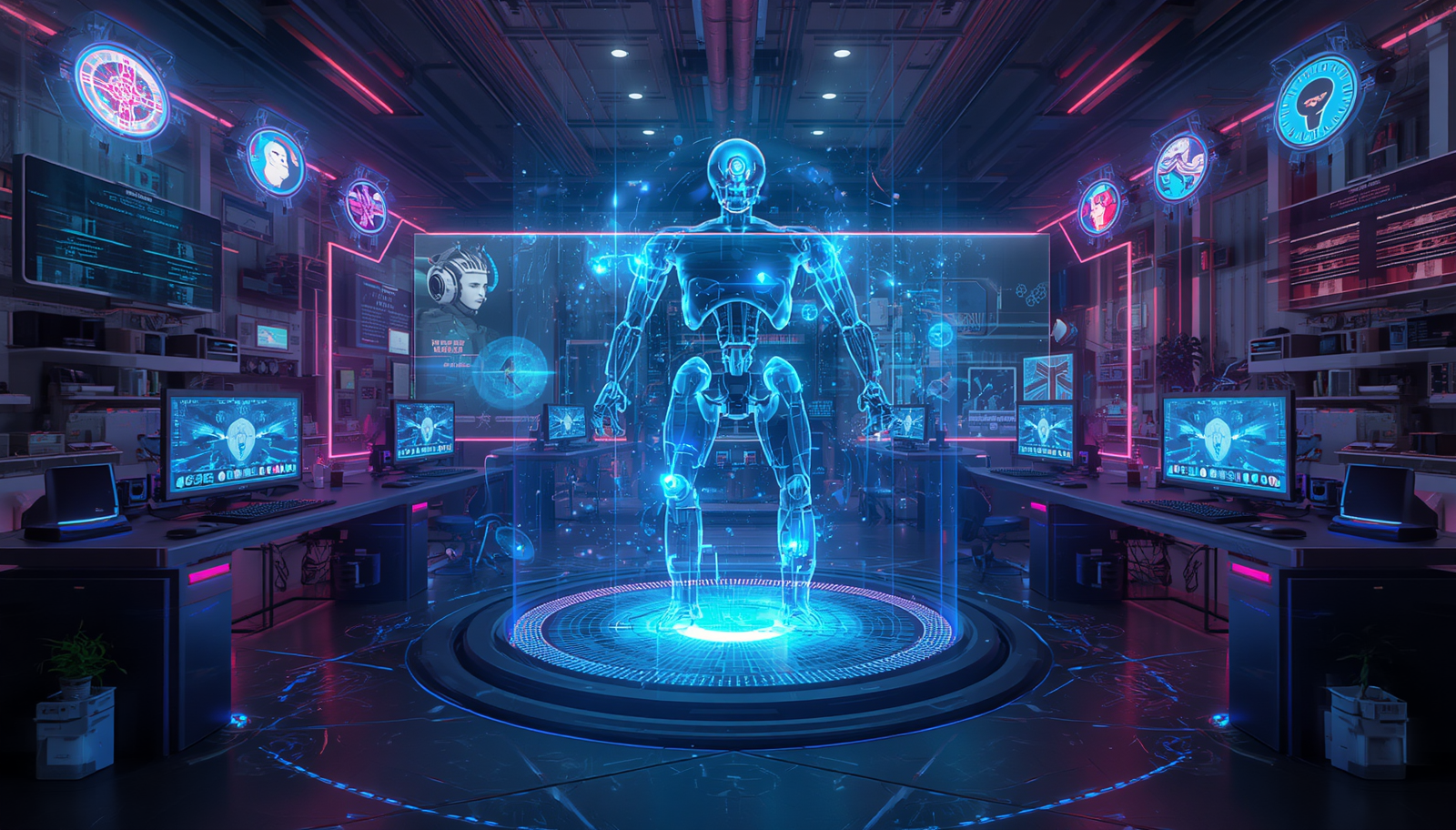
Artificial intelligence has become one of the biggest driving forces behind the evolution of the gaming industry. In 2026, AI is no longer limited to creating smarter computer-controlled opponents. It now influences nearly every aspect of modern video games, from realistic characters and dynamic storytelling to personalized gameplay experiences and advanced game development.
Whether you play action games, role-playing adventures, sports titles, racing simulators, strategy games, or multiplayer shooters, artificial intelligence is quietly working behind the scenes to make every gaming session more immersive and engaging. Developers are using AI to create worlds that feel alive, reduce repetitive gameplay, improve graphics, and accelerate the production of new content.
For gamers, this means richer experiences, more believable virtual worlds, and games that continue evolving long after release. This article explores how AI is transforming video games in 2026 and why this technology is shaping the future of interactive entertainment.
The Rise of Artificial Intelligence in Gaming
Artificial intelligence has been part of gaming for decades, but its role has expanded dramatically in recent years.
Earlier games relied on simple AI systems that followed predictable rules. Enemies often repeated the same actions, characters followed scripted paths, and game worlds remained largely unchanged regardless of player decisions.
Modern AI systems are significantly more advanced. They analyze player behavior, adapt to different playstyles, generate realistic conversations, improve non-player character interactions, and create dynamic environments that respond intelligently to player choices.
This shift has made games feel less scripted and more like living worlds.
Smarter Non-Player Characters
One of the most noticeable improvements brought by AI is the behavior of non-player characters.
In older games, characters often repeated the same dialogue and followed identical routines every time players interacted with them.
In 2026, AI enables characters to react naturally based on player actions, environmental conditions, and previous interactions.
Enemies cooperate more effectively during combat, civilians respond realistically to changing situations, and companions provide meaningful assistance rather than simply following predetermined instructions.
These improvements make game worlds feel far more believable and immersive.
Dynamic Storytelling
Artificial intelligence is changing how stories unfold inside video games.
Rather than following one fixed narrative, many modern games use AI to adjust dialogue, mission outcomes, and character relationships based on player decisions.
Each choice can influence future events, making every playthrough unique.
Instead of replaying identical storylines, players experience evolving narratives that adapt to their actions, encouraging greater exploration and replayability.
This level of personalization creates stronger emotional connections between players and the virtual worlds they explore.
Personalized Gaming Experiences
AI now studies how individual players approach games.
Some players enjoy exploration while others focus on combat, puzzles, or competitive multiplayer.
Modern AI systems recognize these preferences and adjust gameplay accordingly.
Difficulty settings can change automatically based on player performance.
Mission recommendations become more relevant.
Loot rewards may reflect preferred playstyles.
Tutorials adapt to player experience levels.
These personalized systems help make games enjoyable for both beginners and experienced gamers.
Artificial Intelligence Improves Enemy Behavior
Enemy intelligence has become significantly more sophisticated.
Rather than attacking blindly, AI-controlled opponents now coordinate strategies, seek cover intelligently, communicate with teammates, and adapt to player tactics.
If players repeatedly rely on the same strategy, enemies may learn to counter those approaches during future encounters.
This creates more challenging and rewarding gameplay while reducing repetitive combat scenarios.
As a result, victories feel more satisfying because opponents behave more like skilled human competitors.
AI-Generated Worlds
Procedural generation has existed for years, but artificial intelligence has made it far more advanced.
Modern AI can generate realistic landscapes, cities, caves, forests, and entire ecosystems while maintaining logical world design.
Instead of manually creating every location, developers use AI to build expansive environments filled with unique landmarks, wildlife, weather systems, and interactive elements.
This technology allows games to offer enormous worlds without sacrificing quality or visual variety.
Better Voice Interaction
Voice technology powered by artificial intelligence is becoming increasingly common.
Players can communicate naturally with in-game characters using spoken commands rather than selecting dialogue options from menus.
Characters respond conversationally, creating more immersive interactions.
As voice recognition technology improves, future games may allow complete conversations with AI-driven characters capable of understanding context and emotion.
This innovation could fundamentally change how stories are experienced in video games.
Faster Game Development
Artificial intelligence is also transforming how games are created.
Developers use AI to automate repetitive production tasks such as animation, environment design, quality testing, dialogue generation, texture creation, and bug detection.
This allows development teams to focus more time on creativity and gameplay innovation.
Smaller studios can now produce higher-quality games by using AI tools that previously required much larger teams.
As development becomes more efficient, players benefit from faster updates and more polished gaming experiences.
AI Enhances Graphics
Modern graphics technology increasingly relies on artificial intelligence.
AI-powered image enhancement improves texture quality, lighting, shadows, reflections, and animation performance.
Upscaling technologies generate sharper visuals while maintaining smooth frame rates.
This allows players to enjoy better graphics without requiring extremely expensive computer hardware.
The result is a more realistic gaming experience that remains accessible to a wider audience.
More Realistic Open Worlds
Open world games benefit enormously from artificial intelligence.
Wildlife behaves naturally within ecosystems.
Traffic systems react intelligently to road conditions.
Weather influences character behavior.
Cities remain active with dynamic routines throughout the day and night.
Instead of static environments, AI creates living worlds where events continue unfolding regardless of player presence.
This realism significantly increases immersion during exploration.
Artificial Intelligence in Multiplayer Games
Competitive multiplayer games also rely heavily on AI.
Matchmaking systems analyze player skill to create balanced matches.
Anti-cheat software uses machine learning to identify suspicious behavior more accurately.
Voice moderation systems automatically detect abusive language while protecting healthy online communities.
AI also assists developers by analyzing millions of gameplay sessions to identify balance issues, overpowered weapons, and unfair mechanics.
These improvements help maintain enjoyable competitive experiences.
AI-Powered Accessibility Features
Accessibility has become an important focus for modern game developers.
Artificial intelligence now supports players through real-time speech recognition, automatic subtitles, visual assistance, adaptive difficulty, language translation, and customizable controls.
These features make games more inclusive by allowing people with different abilities to enjoy interactive entertainment more comfortably.
As accessibility technology continues improving, gaming becomes available to an even broader audience.
Artificial Intelligence and Game Testing
Testing large modern games is an enormous challenge.
AI-powered testing systems can explore thousands of gameplay scenarios much faster than traditional methods.
These systems identify bugs, broken missions, collision problems, animation errors, and performance issues before release.
Faster testing leads to more stable launches and fewer technical problems for players.
Developers can also release updates more efficiently using AI-assisted quality assurance.
Challenges of AI in Gaming
Although artificial intelligence provides numerous advantages, it also introduces new challenges.
Developers must ensure AI-generated content maintains high quality and consistency.
Overreliance on automation could reduce creative originality if not carefully managed.
Privacy concerns arise when personalization systems collect gameplay data.
Competitive games must prevent AI tools from creating unfair advantages through cheating or automated gameplay.
Balancing innovation with ethical development practices remains essential as AI technology continues advancing.
What This Means for Gamers
The increasing use of artificial intelligence benefits players in several meaningful ways.
Games become more immersive through realistic characters and dynamic environments.
Stories feel unique because they adapt to player decisions.
Graphics continue improving while requiring less powerful hardware.
Online experiences become fairer through better matchmaking and cheat detection.
Frequent updates introduce fresh content more quickly thanks to AI-assisted development.
Ultimately, players spend less time encountering repetitive gameplay and more time enjoying engaging adventures.
The Future of AI in Video Games
The role of artificial intelligence in gaming is expected to expand even further beyond 2026.
Future games may feature completely unscripted conversations with characters, infinitely evolving open worlds, personalized quests generated in real time, and companions capable of remembering every interaction throughout an entire adventure.
Advances in generative AI may allow players to create custom stories, build unique worlds, and design personalized missions using simple voice or text commands.
Cloud computing and advanced machine learning models will continue making these experiences possible while supporting larger online communities and increasingly detailed virtual environments.
The future points toward games that feel less like software and more like living, responsive worlds.