
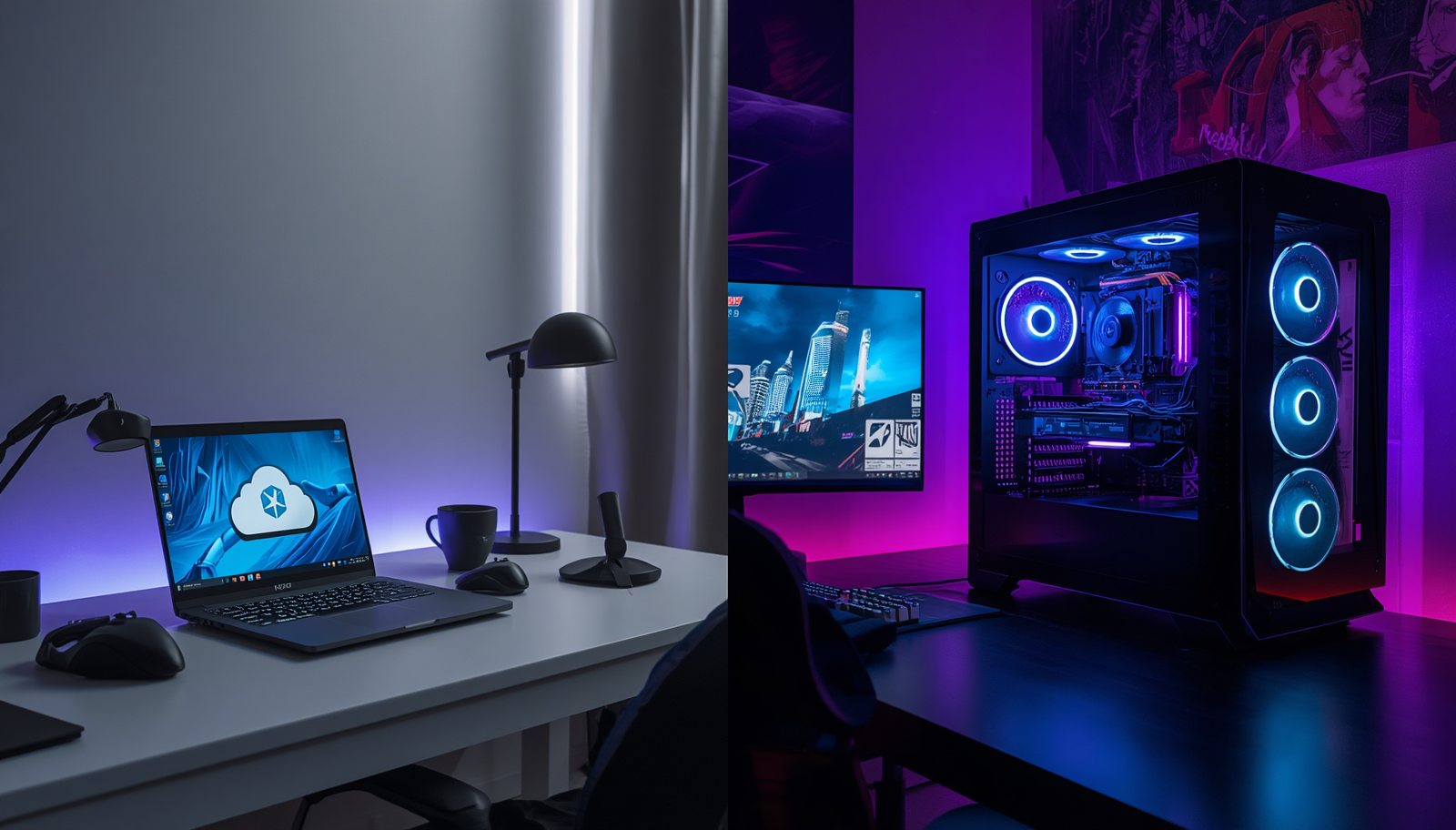
Gaming has changed dramatically over the past decade. What once required expensive hardware and frequent upgrades can now, in many cases, be accessed through the cloud with nothing more than a stable internet connection. In 2026, gamers have two powerful options: investing in a dedicated gaming PC or embracing cloud gaming services that stream high-quality games directly to compatible devices.
Both approaches offer impressive experiences, but each comes with its own strengths and limitations. While gaming PCs continue delivering unmatched performance and customization, cloud gaming has matured into a practical alternative for players who value convenience and flexibility.
If you’re deciding between building or buying a gaming PC and subscribing to a cloud gaming platform, this guide will help you understand the differences, advantages, disadvantages, costs, and which option is best suited to your gaming style in 2026.
The Evolution of Gaming in 2026
The gaming industry continues to evolve alongside advances in artificial intelligence, cloud computing, graphics technology, and internet infrastructure.
Modern games feature realistic lighting, advanced physics, detailed open worlds, and AI-powered characters that demand increasingly powerful hardware.
At the same time, cloud technology has improved dramatically. Faster internet speeds, lower latency, and expanded data center networks have made game streaming smoother and more reliable than ever before.
As a result, both gaming PCs and cloud gaming platforms now offer compelling experiences for different types of players.
What Is Cloud Gaming?
Cloud gaming allows players to stream games over the internet instead of installing them on their own computers.
The game runs on powerful remote servers while video and audio are transmitted to the player’s device in real time. Player inputs are instantly sent back to the server, creating an interactive gaming experience without requiring high-end hardware.
Because all processing happens remotely, even lightweight laptops, tablets, smart televisions, and entry-level desktop computers can play graphically demanding games.
This accessibility has made cloud gaming increasingly attractive in 2026.
What Is a Gaming PC?
A gaming PC is a computer specifically designed to handle demanding video games using powerful internal hardware.
Modern gaming systems typically include high-performance processors, dedicated graphics cards, fast solid-state storage, and large amounts of memory.
Unlike cloud gaming, every aspect of the game runs locally on the user’s hardware, allowing maximum graphical quality, extremely low latency, and complete control over performance settings.
Gaming PCs remain the preferred choice for many competitive players and hardware enthusiasts.
Performance Comparison
Performance remains one of the biggest differences between these two options.
A high-end gaming PC delivers exceptional graphics, high frame rates, ultra-fast response times, and advanced visual effects without depending on internet quality.
Cloud gaming has improved significantly, but performance still depends heavily on network speed, connection stability, and server availability.
Players with excellent internet connections may experience smooth gameplay that rivals local hardware, while those with inconsistent connections may encounter latency, compression artifacts, or occasional interruptions.
For players seeking absolute performance, gaming PCs continue holding the advantage.
Graphics Quality
Gaming PCs provide greater flexibility when it comes to graphics settings.
Players can adjust resolution, texture quality, ray tracing, shadow detail, anti-aliasing, and other visual features based on their hardware capabilities.
Cloud gaming platforms typically offer preset graphics configurations optimized for streaming efficiency.
Although many services now support high-resolution streaming and advanced visual effects, image compression may slightly reduce visual sharpness compared with locally rendered gameplay.
For gamers who prioritize maximum image quality, dedicated gaming hardware remains the better option.
Cost Comparison
Budget is often one of the most important considerations.
A quality gaming PC represents a significant upfront investment, especially when purchasing powerful graphics hardware capable of running the latest games at maximum settings.
Cloud gaming generally requires only a compatible device and a subscription, making it much more affordable initially.
However, subscription fees accumulate over time, and players may eventually spend a considerable amount after several years of continuous service.
For gamers who upgrade hardware infrequently, a gaming PC may provide better long-term value despite its higher initial cost.
Hardware Upgrades
One of the biggest advantages of gaming PCs is upgradeability.
Players can replace graphics cards, processors, storage drives, memory, cooling systems, and other components as technology advances.
This flexibility extends the lifespan of the computer while allowing gradual performance improvements.
Cloud gaming eliminates hardware upgrades entirely because servers are maintained by the service provider.
Whenever new hardware becomes available, subscribers automatically benefit without purchasing new equipment.
This convenience appeals to users who prefer avoiding hardware maintenance.
Game Library Availability
Game selection varies considerably between cloud gaming services and gaming PCs.
Gaming PCs provide access to one of the largest game libraries available, including independent titles, classic games, competitive esports, simulation software, and extensive modification communities.
Cloud gaming platforms continue expanding their catalogs but may not include every major release due to licensing agreements.
Some games also leave streaming platforms over time, affecting long-term availability.
Players with diverse gaming interests may appreciate the broader compatibility offered by a traditional gaming PC.
Internet Requirements
Internet quality plays a crucial role in cloud gaming.
High-speed broadband with low latency and stable performance is essential for smooth gameplay.
Even brief network interruptions can negatively affect the gaming experience.
Gaming PCs, by contrast, allow single-player games to run entirely offline once installed.
Only multiplayer titles require internet access.
For players living in areas with unreliable internet service, gaming PCs remain the more dependable solution.
Competitive Gaming
Competitive gamers often demand the lowest possible input delay and the highest frame rates.
Gaming PCs excel in this area by processing every action locally, reducing latency to a minimum.
Professional esports players generally prefer dedicated gaming hardware because even tiny delays can influence match outcomes.
Cloud gaming has made impressive progress in reducing latency, but competitive players still tend to favor local systems for the highest level of precision.
Portability
Cloud gaming offers exceptional flexibility.
Players can switch between laptops, tablets, smartphones, desktop computers, and compatible smart televisions without transferring game files or purchasing additional hardware.
Saved progress is often synchronized automatically across devices.
Gaming PCs are less portable, particularly desktop systems.
Although gaming laptops provide mobility, they are typically heavier, more expensive, and less upgradeable than desktop computers.
For gamers who frequently travel, cloud gaming provides greater convenience.
Artificial Intelligence and the Future of Gaming
Artificial intelligence is influencing both cloud gaming and gaming PCs.
Cloud providers use AI to optimize streaming quality, reduce bandwidth usage, improve video compression, and predict network conditions.
Gaming PCs benefit from AI-powered graphics technologies that improve image quality, generate additional frames, and enhance overall performance.
Developers are also using artificial intelligence to create smarter game characters, personalized experiences, and more dynamic virtual worlds.
These advancements benefit players regardless of which gaming platform they choose.
Energy Efficiency
Cloud gaming reduces the need for powerful hardware at home because remote servers handle processing.
This results in lower electricity consumption for individual users.
Gaming PCs, especially high-performance systems, consume considerably more power during demanding games.
However, large cloud data centers also require significant energy resources, making overall environmental comparisons more complex.
Energy-conscious players may appreciate the reduced household power usage associated with cloud gaming.
Who Should Choose Cloud Gaming?
Cloud gaming is an excellent option for players who prefer affordability, convenience, and accessibility.
It works well for casual gamers who do not want to invest in expensive hardware.
It also benefits users who travel frequently or enjoy playing across multiple devices.
Players with fast and reliable internet connections can enjoy impressive gaming experiences without worrying about hardware upgrades.
For newcomers entering the gaming world, cloud gaming provides an easy and affordable starting point.
Who Should Choose a Gaming PC?
Gaming PCs remain the best choice for players seeking the highest performance and complete control over their gaming experience.
Competitive gamers benefit from lower latency and higher frame rates.
Content creators can use gaming PCs for video editing, streaming, graphic design, and software development alongside gaming.
Players interested in game modifications, virtual reality, and extensive customization will also find gaming PCs far more versatile.
For enthusiasts who enjoy building and upgrading hardware, a gaming PC remains difficult to replace.
The Future of Gaming Beyond 2026
The line between cloud gaming and traditional gaming hardware is expected to become increasingly blurred.
Internet infrastructure continues improving, reducing latency and increasing streaming quality.
Artificial intelligence will optimize both cloud servers and local hardware, delivering smoother gameplay and more immersive experiences.
Hybrid gaming models may become increasingly common, allowing players to switch seamlessly between local hardware and cloud streaming depending on their location and available internet connection.
Rather than competing directly, cloud gaming and gaming PCs are likely to complement each other as gaming technology continues advancing.